Vinyl Nosing For Stairs may look like a narrow product category, but it sits at the intersection of safety, durability, and finish quality. Grand View Research’s Vinyl Flooring Market report estimated the global market at USD 25.6 billion in 2023 and projected continued growth through 2030. That figure covers vinyl flooring broadly, not stair nosings alone. Still, it signals a large, active supply chain—and makes careful supplier comparisons worthwhile.
On a staircase, details matter. A nosing must fit the tread, provide a secure edge, and stand up to repeated foot traffic. A loose profile, poor adhesive compatibility, or slippery surface can undermine an otherwise attractive installation. This guide examines ten China-based suppliers, looking beyond catalog photos to product specifications, customization, quality documentation, and communication. Buyers should confirm dimensions, material composition, test records, and sample performance before placing an order. Small checks matter.
One limitation deserves candor: the materials provided for this article contain no verifiable, named expert quotation about vinyl stair nosings. Rather than attribute invented words to a specialist, this introduction leaves that quotation out. A confirmed statement from a flooring engineer or stair-safety professional would strengthen the final article. Supplier rankings also require scrutiny; export volume alone cannot prove product quality. The comparison that follows is a starting point, not a substitute for testing samples against the project’s actual stairs.
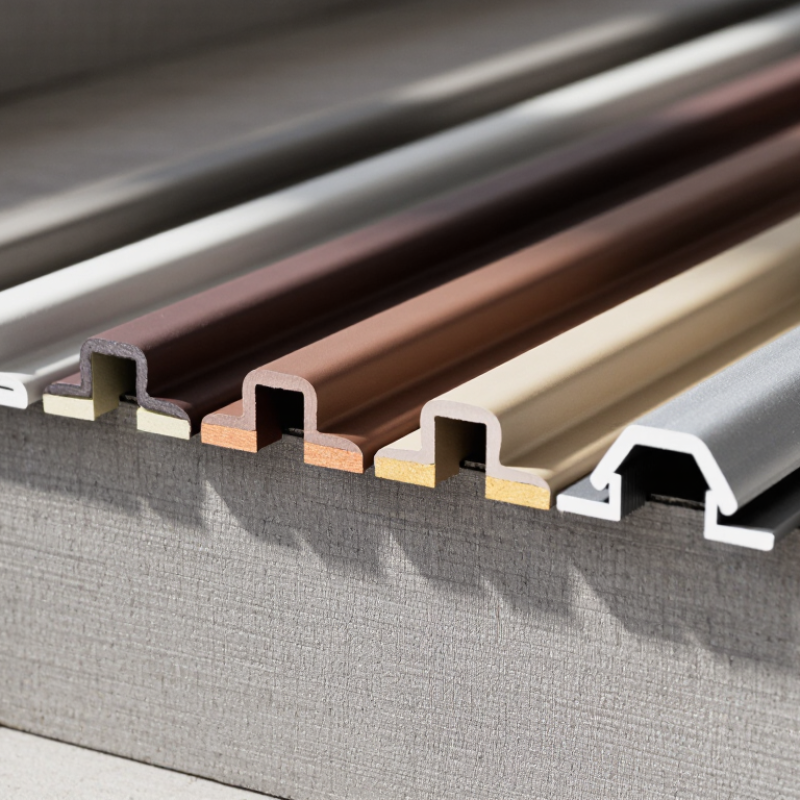
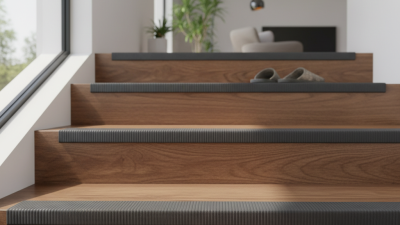
Vinyl stair nosing is a shaped PVC profile fitted to the front edge of a stair tread. It covers the exposed edge, creates a clearer step boundary, and can provide a more secure foot contact when paired with a suitable insert. The profile may be square, rounded, or designed to overlap the tread. Small differences matter. A rounded edge, for example, may feel different underfoot from a sharply defined one.
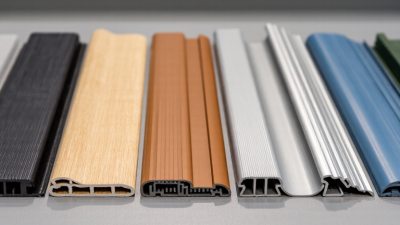
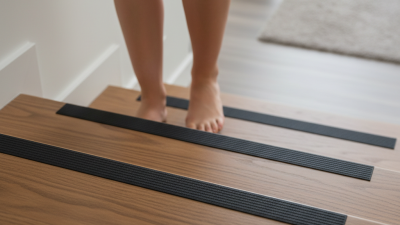
Many systems combine a rigid PVC body with a textured insert. The insert may be ribbed or patterned to improve grip and visibility. Check that its surface suits the location, cleaning routine, and expected foot traffic. Some designs use replaceable inserts, which can simplify maintenance. Others have an integrated surface. Neither option is automatically better; the stair material and use should guide the choice.
Fixing methods include adhesive, screws, or a combination of both. The correct method depends on the profile, substrate, and manufacturer’s installation guidance. Measure each tread rather than assuming every stair is identical. A clean, dry, level surface helps the nosing sit evenly. That detail is easy to overlook. In practice, claims such as “universal fit” deserve careful checking: an unsuitable profile may leave gaps or create an uneven edge. Reliable suppliers should provide clear dimensions, material details, and fitting instructions.
When comparing China’s top 10 vinyl stair-nosing suppliers, use the U.S. ADA dimensions as a practical screening benchmark: risers should measure 4–7 inches, and treads should be at least 11 inches deep. Keep measurements consistent from step to step. A tape measure at the stair edge can reveal differences that a catalog photo hides.
Vinyl nosing can protect stair edges and provide a defined visual boundary, but it cannot correct stairs with unsuitable dimensions. Ask suppliers for clear product dimensions, installation instructions, and material information. Check whether the profile fits the actual tread edge without creating a raised lip or reducing usable tread depth. Small details matter. A loose corner can catch a shoe.
Request samples and test the finish under the conditions expected on site, including cleaning and regular foot traffic. Ask for supporting slip-resistance data rather than relying on phrases like “safe” or “non-slip.” ADA dimensions are a useful U.S. reference, not proof that a particular product or project meets every applicable requirement. I would not choose from price alone; comparing samples takes time, and that step is easy to skip.
Comparing ten Chinese vinyl stair-nosing suppliers works best when the same measures are applied to each. Check product range: profiles, colors, surface textures, lengths, and compatible flooring systems. Ask for technical sheets showing dimensions, material composition, and slip-resistance test methods. A broad catalog is useful, but only if samples match production batches.
Capacity should be verified through stated monthly output, lead times, and quality-control records—not factory photos alone. For export reach, request examples of destination markets, packaging specifications, and shipping experience. Fortune Business Insights estimated the global vinyl flooring market at USD 25.01 billion in 2023, with projected growth through 2032. This is market context, not stair-nosing sales data. A glossy catalog still proves little; independent checks matter.
Tips: Compare like with like. Request identical samples and a recent production schedule from all ten suppliers. Then score range, capacity, and export readiness separately. Some details may remain difficult to verify remotely. That uncertainty belongs in the comparison.
China Top 10 Vinyl Nosing for Stairs Suppliers?
When comparing vinyl stair nosing suppliers in China, ask for test records tied to the exact product and surface finish. A general catalogue sheet cannot show how a specific profile performs. Check the report date, sample description, test method, and laboratory details. Make sure the tested sample matches the color, texture, and production material you plan to order.
Slip results need context. Ask whether testing covered dry and wet conditions, and review the stated method and measured values. Abrasion reports can help compare wear resistance, but they do not predict every staircase’s service life. Traffic, cleaning products, and grit tracked indoors all matter. Not enough. Request fire-test documentation relevant to your project and intended installation. Requirements vary by location, so have the project team confirm which evidence applies.
For VOC claims, look for a report that identifies the tested material and explains the test conditions. Check whether adhesives or other components were included; a nosing tested alone may not represent the installed assembly. Keep the documents with the quotation and sample records. A small mismatch in profile or finish can weaken an otherwise convincing file. It is easy to overlook that detail. If a supplier cannot clarify a report, pause and ask for written answers before approving samples or production.
Anonymous supplier-screening worksheet only: the entries below are placeholders, not identified or ranked companies, and no supplier test results have been independently verified. Request reports for the exact product and construction being quoted; confirm the test method, laboratory, report date, specimen details, and applicable project requirements.
| Screening slot | Product details to confirm | Slip documentation to request | Abrasion documentation to request | Fire documentation to request | VOC documentation to request | Verification status |
|---|---|---|---|---|---|---|
| Supplier 01 | Vinyl/PVC stair nosing; confirm profile, dimensions, wear layer, backing, and intended installation. | Product-specific test report; confirm the method and whether results represent the installed nosing surface and relevant wet/dry conditions. | Report for the supplied construction; ASTM F510 is a test method for abrasion resistance of resilient floor coverings. Confirm applicability to the nosing. | Request the required flooring fire-test report. ASTM E648 evaluates critical radiant flux; confirm the tested assembly and project acceptance criteria. | Request a product-specific emissions report using CDPH Standard Method v1.2-2017, where required by the project. | Pending — no supplier or product report verified |

| Supplier 02 | Vinyl/PVC stair nosing; confirm profile, dimensions, wear layer, backing, and intended installation. | Product-specific test report; confirm the method and whether results represent the installed nosing surface and relevant wet/dry conditions. | Report for the supplied construction; ASTM F510 is a test method for abrasion resistance of resilient floor coverings. Confirm applicability to the nosing. | Request the required flooring fire-test report. ASTM E648 evaluates critical radiant flux; confirm the tested assembly and project acceptance criteria. | Request a product-specific emissions report using CDPH Standard Method v1.2-2017, where required by the project. | Pending — no supplier or product report verified |
| Supplier 03 | Vinyl/PVC stair nosing; confirm profile, dimensions, wear layer, backing, and intended installation. | Product-specific test report; confirm the method and whether results represent the installed nosing surface and relevant wet/dry conditions. | Report for the supplied construction; ASTM F510 is a test method for abrasion resistance of resilient floor coverings. Confirm applicability to the nosing. | Request the required flooring fire-test report. ASTM E648 evaluates critical radiant flux; confirm the tested assembly and project acceptance criteria. | Request a product-specific emissions report using CDPH Standard Method v1.2-2017, where required by the project. | Pending — no supplier or product report verified |
| Supplier 04 | Vinyl/PVC stair nosing; confirm profile, dimensions, wear layer, backing, and intended installation. | Product-specific test report; confirm the method and whether results represent the installed nosing surface and relevant wet/dry conditions. | Report for the supplied construction; ASTM F510 is a test method for abrasion resistance of resilient floor coverings. Confirm applicability to the nosing. | Request the required flooring fire-test report. ASTM E648 evaluates critical radiant flux; confirm the tested assembly and project acceptance criteria. | Request a product-specific emissions report using CDPH Standard Method v1.2-2017, where required by the project. | Pending — no supplier or product report verified |

| Supplier 05 | Vinyl/PVC stair nosing; confirm profile, dimensions, wear layer, backing, and intended installation. | Product-specific test report; confirm the method and whether results represent the installed nosing surface and relevant wet/dry conditions. | Report for the supplied construction; ASTM F510 is a test method for abrasion resistance of resilient floor coverings. Confirm applicability to the nosing. | Request the required flooring fire-test report. ASTM E648 evaluates critical radiant flux; confirm the tested assembly and project acceptance criteria. | Request a product-specific emissions report using CDPH Standard Method v1.2-2017, where required by the project. | Pending — no supplier or product report verified |
| Supplier 06 | Vinyl/PVC stair nosing; confirm profile, dimensions, wear layer, backing, and intended installation. | Product-specific test report; confirm the method and whether results represent the installed nosing surface and relevant wet/dry conditions. | Report for the supplied construction; ASTM F510 is a test method for abrasion resistance of resilient floor coverings. Confirm applicability to the nosing. | Request the required flooring fire-test report. ASTM E648 evaluates critical radiant flux; confirm the tested assembly and project acceptance criteria. | Request a product-specific emissions report using CDPH Standard Method v1.2-2017, where required by the project. | Pending — no supplier or product report verified |
| Supplier 07 | Vinyl/PVC stair nosing; confirm profile, dimensions, wear layer, backing, and intended installation. | Product-specific test report; confirm the method and whether results represent the installed nosing surface and relevant wet/dry conditions. | Report for the supplied construction; ASTM F510 is a test method for abrasion resistance of resilient floor coverings. Confirm applicability to the nosing. | Request the required flooring fire-test report. ASTM E648 evaluates critical radiant flux; confirm the tested assembly and project acceptance criteria. | Request a product-specific emissions report using CDPH Standard Method v1.2-2017, where required by the project. | Pending — no supplier or product report verified |
| Supplier 08 | Vinyl/PVC stair nosing; confirm profile, dimensions, wear layer, backing, and intended installation. | Product-specific test report; confirm the method and whether results represent the installed nosing surface and relevant wet/dry conditions. | Report for the supplied construction; ASTM F510 is a test method for abrasion resistance of resilient floor coverings. Confirm applicability to the nosing. | Request the required flooring fire-test report. ASTM E648 evaluates critical radiant flux; confirm the tested assembly and project acceptance criteria. | Request a product-specific emissions report using CDPH Standard Method v1.2-2017, where required by the project. | Pending — no supplier or product report verified |
| Supplier 09 | Vinyl/PVC stair nosing; confirm profile, dimensions, wear layer, backing, and intended installation. | Product-specific test report; confirm the method and whether results represent the installed nosing surface and relevant wet/dry conditions. | Report for the supplied construction; ASTM F510 is a test method for abrasion resistance of resilient floor coverings. Confirm applicability to the nosing. | Request the required flooring fire-test report. ASTM E648 evaluates critical radiant flux; confirm the tested assembly and project acceptance criteria. | Request a product-specific emissions report using CDPH Standard Method v1.2-2017, where required by the project. | Pending — no supplier or product report verified |
| Supplier 10 | Vinyl/PVC stair nosing; confirm profile, dimensions, wear layer, backing, and intended installation. | Product-specific test report; confirm the method and whether results represent the installed nosing surface and relevant wet/dry conditions. | Report for the supplied construction; ASTM F510 is a test method for abrasion resistance of resilient floor coverings. Confirm applicability to the nosing. | Request the required flooring fire-test report. ASTM E648 evaluates critical radiant flux; confirm the tested assembly and project acceptance criteria. | Request a product-specific emissions report using CDPH Standard Method v1.2-2017, where required by the project. | Pending — no supplier or product report verified |
When comparing vinyl stair nosing suppliers, ask for the MOQ by profile, color, and length. A low headline MOQ may apply only to standard stock, not custom colors. Request a written breakdown of sample, tooling, and packaging charges. Small details matter: a carton may contain lengths that do not fit your stair layout, creating offcuts and extra cost.
Lead-time promises should separate production from transit and customs handling. The World Bank’s 2023 Logistics Performance Index assessed 139 economies and included shipment timeliness among its measures. That is a useful reminder that delivery schedules depend on more than factory output. Ask suppliers to state the production window, dispatch point, shipping method, and remedy for delays. Get the dates in writing. A vague “about four weeks” is not a schedule.
Read warranty terms against actual use: indoor or outdoor installation, expected foot traffic, adhesive compatibility, and wear-layer limits. Ask what evidence supports compliance claims, including test methods and reports for slip performance, fire requirements, or restricted substances relevant to your market. Check that documents identify the same product profile and material you are buying. I would also request one full-length sample before approval; photographs can hide edge lift and color variation. Even with careful checks, installation quality can still affect performance.
Illustrative screening scenarios, not verified supplier rankings or company-specific quotations. Confirm all terms directly with suppliers.
How to assess: These planning scenarios show plausible variations in minimum order quantity (MOQ) and production lead time; actual terms depend on profile, finish, customization, and order volume. Ask for written warranty coverage and duration—often quoted in the 1–3 year range—and request applicable product test reports and compliance documentation for the destination market. Verify document scope and validity before ordering.
